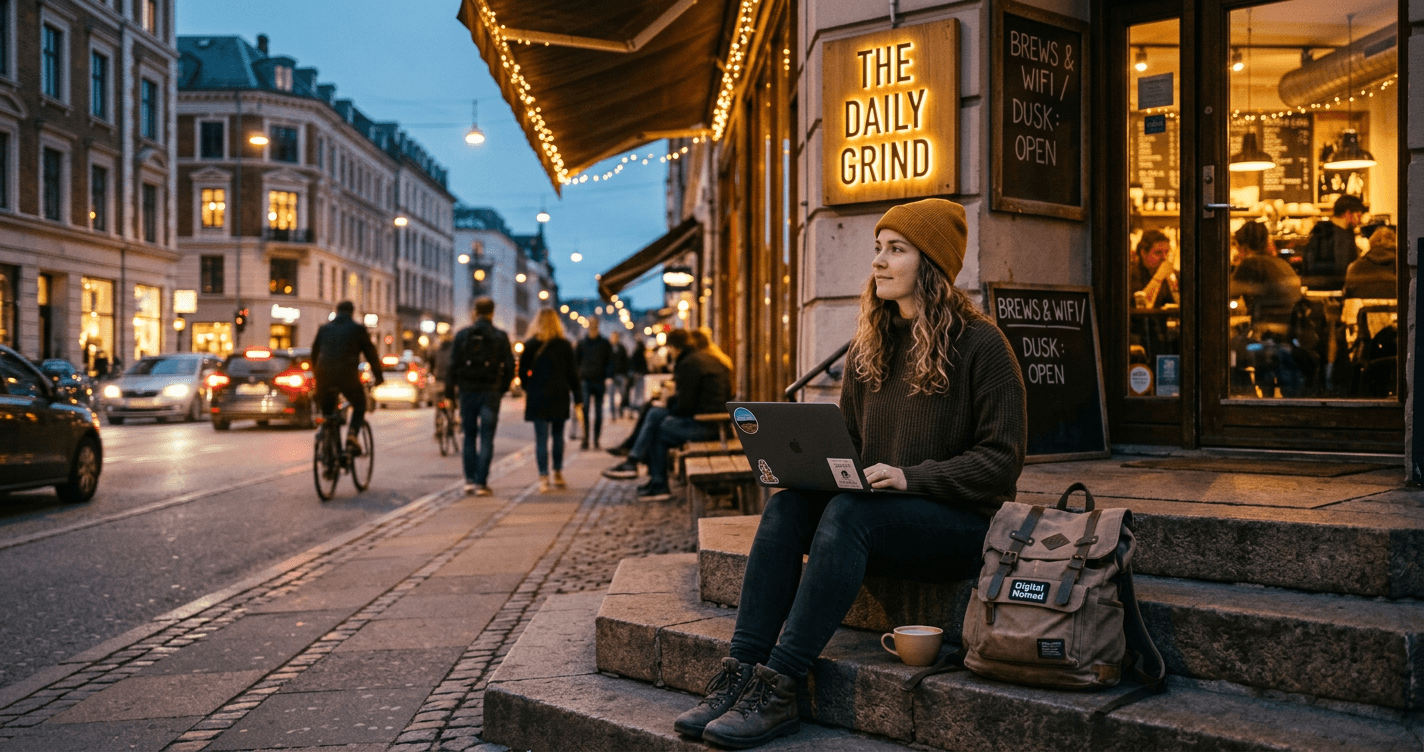
The nomad lifestyle has an honesty problem. The photos show the sunsets, the beachside coworking sessions, and the freedom. They rarely show the Tuesday night in a new city when you've been here two weeks, you don't know a single person, and you're eating dinner alone for the fifth time.
MBO Partners estimates that 35% of digital nomads identify loneliness as one of their top three challenges - ranking it above internet reliability, visa issues, and time zone friction. That number is almost certainly understated, because admitting to loneliness while living what looks like a dream life carries a particular social cost.
This article is about digital nomad loneliness solutions that are specific, practical, and honest. Not generic advice to "just put yourself out there" - but the structural and psychological tools that actually shift the experience.
Why Nomad Loneliness Hits Differently
Loneliness in a fixed life is usually a signal that something is broken - you've drifted from your community, gone through a transition, need to rebuild.
Nomad loneliness is different because it's structural, not accidental. The lifestyle itself creates it. You move to a new city and your social capital resets to zero. Every friend you make, every coffee shop you become a regular at, every weekly event you attend - you leave it behind when you move on.
The particular sting is the departure curve. Most nomads report that the social rewards of a new city come at the 3–5 week mark, right around when they're leaving or getting itchy feet. You're finally getting good at being somewhere - and then you go.
This creates a pattern where nomads are perpetually in the early-stage, surface-level phase of friendships - never quite getting to the depth that makes connection feel sustaining.
Understanding this isn't pessimistic. It's clarifying. If the problem is structural, the solutions need to be structural too.
The Structural Fixes That Actually Work
Stay longer. The single highest-leverage change most nomads can make. Moving every 2–3 weeks keeps you permanently in the loneliness zone. Staying 6–12 weeks changes the entire social dynamic. You become a regular. People start inviting you places. Friendships develop past acquaintance-level. The 6-week threshold, in particular, is where the social tide turns for most people.
Coliving spaces. Purpose-built for this problem. The built-in social infrastructure - shared meals, common areas, organized activities - removes the activation energy barrier entirely. You meet people the day you arrive. The tradeoff is cost (coliving runs $800–$2,500/month in most cities) and less privacy. Many experienced nomads rotate: coliving in a new city to build a base, then moving to their own place once they have a local network.
Coworking memberships over daily passes. When you buy a monthly membership, you become a member rather than a visitor. The staff knows your name. You see the same faces. Small talk becomes real conversation. Daily pass culture - showing up, working silently, leaving - is efficient but socially inert. Nomad List has solid coverage of coworking spaces by city if you're researching before you arrive.
One recurring event per week, non-negotiable. Find one weekly thing - a coffee morning, a running club, a language exchange, a Tuesday surf session - and show up every week without exception. Recurring events build the familiarity that turns strangers into friends. First week you're new. Second week you're familiar. Third week you're part of it.
Using Apps and Digital Tools Effectively
Apps can dramatically reduce the cold-start problem, but most nomads use them wrong - passive browsing instead of active engagement.
What works:
- Profiles that are specific about what you're open to ("looking for coworking buddies and hiking partners, here for 8 weeks") generate far more responses than a vague bio
- Suggesting a specific meeting within two exchanges - "coffee at [place] on Thursday at 10?" - before the window closes
- City-specific Slack groups for event discovery and organic conversation (Nomads Nation aggregates several)
WandrMeet's City Hub feature is built specifically for this problem - a structured local community to plug into, with group chats, events, and a clear view of who's in your city and how long they'll be around. The Next Destinations filter lets you find people who'll be in the same city as you at the same time, so you can connect before you even arrive.
What doesn't work:
- Passive swiping without initiating specific plans
- Large Facebook groups where everything gets lost
- Volume over quality - 10 shallow interactions leave you feeling emptier than one real one
The Mindset Shifts That Change the Experience
Beyond the tactics, two cognitive shifts matter more than any specific tool.
Treat connection as a scheduled activity, not a hoped-for outcome. The nomads who consistently build strong communities in every city are the ones who block time for social activity the same way they block time for client calls. "I'm going to a coffee meetup Tuesday and a running group Saturday" is a plan. "I should try to meet some people this week" is a wish.
Set a "one real person" goal per city, not a "build a friend group" goal. The pressure to replicate the social richness of a hometown in 6 weeks is the enemy of actually connecting with anyone. One genuine friendship per city is transformative. It gives you a local anchor, a person who introduces you to others, someone to call when you're having a bad day in a foreign country. The friend group sometimes follows from the one. It rarely follows from trying to build the whole thing at once.
Be specific about what you're actually struggling with. Nomads are socialized to project a "living the dream" image that makes it harder to be honest about difficulty. When you're specific - "I've been here two weeks and I don't know many people, it's harder than I expected" - you'll find that most people have felt exactly the same thing and are relieved someone said it.
The communities that help most, in any city and on any platform, are built on people being real with each other. The honesty is usually where the connection starts.
Ready to find your people?
Free to join. Tell us where you’re headed and meet the people who’ll be there before you land.
Get started freeFrequently Asked Questions
Is loneliness common among digital nomads?
Yes, and it's significantly underreported. MBO Partners puts the figure at 35% naming it a top challenge. The social cost of admitting loneliness while living a lifestyle that looks aspirational from the outside keeps the numbers artificially low in most surveys.
How long does nomad loneliness usually last?
The sharpest period is typically the first 1–3 months. Once you've developed a social toolkit - you know how to find your first connection in a new city, which types of events work for you, how long you need to stay - the experience shifts substantially. Most long-term nomads describe the first year as the hardest socially, and the second year as markedly better.
What's the fastest way to meet people in a new nomad city?
Coworking spaces, coliving, and structured recurring events are consistently the fastest paths. Activity-based events (hiking, surfing, sports) move faster than passive ones (talks, panels) because you're doing something together. Read more in our guide on how to meet people as a digital nomad.
Does staying longer in each city actually help with loneliness?
Yes - six weeks appears to be the threshold where the social tide turns for most people. Under four weeks, you're almost always in the shallow phase. Over six weeks, you start becoming a known quantity: receiving invitations, building friendships that go past the surface.
Can you build real friendships while moving constantly?
Yes, but it requires active investment. The nomad world is also smaller than it appears - the same people circulate between the same cities, and repeated encounters deepen connections over time. Many nomads report their closest friendships are with other nomads, partly because of the shared context and the intensity of how those friendships formed.
Conclusion
Digital nomad loneliness is real, common, and not a sign that the lifestyle is wrong for you. It's a structural challenge that responds to structural solutions.
Stay longer. Build a recurring social anchor in each city. Use the tools available - apps, coworking memberships, coliving - not passively but with intent. Treat connection as something you plan, not something that happens to you.
The communities that help most are built on people being real with each other. The loneliness is often less about the city and more about whether you've created the conditions for connection to happen. Most nomads who've been doing this for a year will tell you the same thing: it gets genuinely better - but you have to do the work to make it happen.