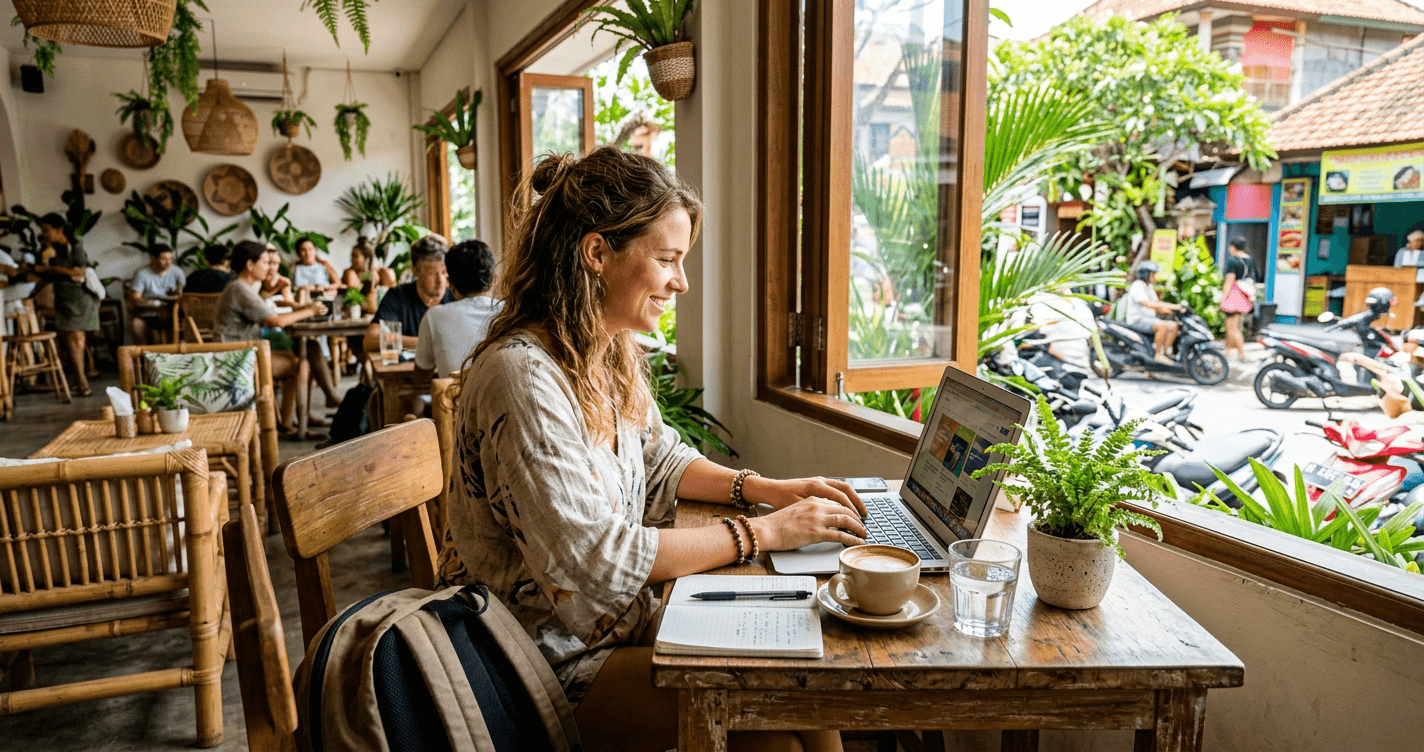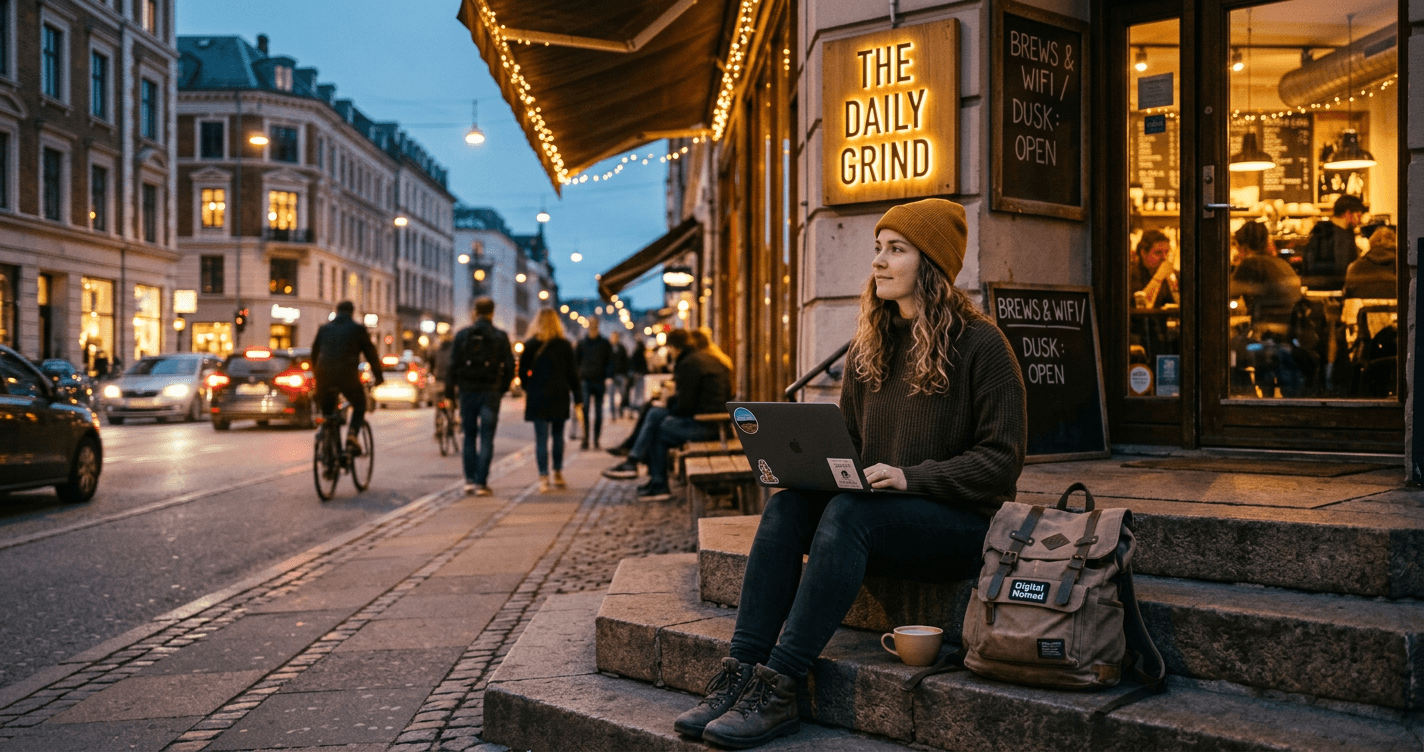
Everyone romanticizes the nomad lifestyle. The Instagram posts show sunsets from rooftop cafes, a laptop propped open next to a coconut. What they don't show is the Sunday afternoon when you've been in Chiang Mai for two weeks, you don't know a single person, and you realize that making friends as an adult in a foreign city is genuinely hard.
This is the part nobody talks about. And it's the part that breaks a lot of people's nomad experiments early.
The good news: it gets easier. Not automatically - but with the right approach, most nomads settle into a rhythm within their first month in a new city. Here's what actually works.
The Mindset Shift You Need First
Before tactics, there's a reframe that matters.
Most of us carry social habits built for long-term environments. You meet people at work, through school, through mutual friends, over months and years. You don't need to be proactive because proximity does the work.
That system completely breaks down when you're moving every few weeks. You have to become intentionally social in a way that can feel deeply unnatural - almost aggressive - if you're used to letting friendships develop passively.
The shift is this: treat meeting people as an activity you schedule, not something that just happens. The nomads who thrive socially are the ones who block time for it the same way they block time for work.
Coworking Spaces: Still the Best Default
Yes, you've heard this before. Yes, it's still true.
The reason coworking spaces work isn't the WiFi or the standing desks - it's the self-selection. Everyone in a coworking space in Bali or Medellín or Tbilisi has opted into a social environment. Nobody goes to Dojo Bali to work in silence. They go because they want to be around other people doing interesting work.
This matters because you've skipped the first 80% of the awkwardness. You already have something in common: you're both remote workers in a foreign country who chose this specific coworking space. That's a conversation.
The move that works: Don't just sit down and open your laptop. When you arrive, find the communal area (coffee bar, couch, kitchen) and spend 15–20 minutes there before going to your desk. Make one comment, ask one question. You don't need to be charming. "Is the WiFi good here? I just arrived" does the job.
Good coworking spaces for meeting people: Dojo in Bali, CAMP in Chiang Mai, Second Home in Lisbon, Selina locations globally, Hubba in Bangkok.
Events Are Underrated
Nomad cities have a lot happening - coffee meetups, networking nights, hiking groups, language exchanges, surf clubs. Most of these are poorly promoted and easy to miss if you're not actively looking.
Where to find them:
- Meetup.com - still works in major cities, though coverage is inconsistent
- Facebook Groups - "Digital Nomads in [City]" groups often have event pinboards
- Hostel common areas - hostels like Bodega in Medellin or Mad Monkey in Southeast Asia throw events that aren't just for backpackers
- Your coworking space's Slack - most good coworking spaces have a members' Slack with a #events channel
- WandrMeet City Hubs - each hub has an events feed with nomad-specific meetups, organized by verified local hosts. These are specifically for people who are there for work, not just passing through.
The type of event matters. Passive events (talks, panels, movie nights) are low-connection. Activity-based events (hikes, sports, cooking classes, language exchanges) are high-connection because you're doing something together. Aim for the latter.
Be the One Who Hosts
This sounds like more effort than it is.
You don't need to organize a proper event. "I'm going to X restaurant at 7pm, anyone want to join?" in a Slack channel or WhatsApp group is enough. It positions you as someone with social initiative, and people with social initiative are immediately more interesting.
Some of the best nomad social circles start this way. One person says "I'm going to the night market, DM me if you want to come" and three strangers end up friends for the next month.
Use Apps Intentionally
Apps are tools, not magic. The ones that work for nomads do so because they reduce the cold-start problem - you don't have to wait for serendipity when you can just see who else is in your city and what they're open to.
A few categories:
For professional networking: LinkedIn is obvious but doesn't account for the nomad context. Reach out to people whose profiles show they're in the same city as you right now. "Hey, I see you're also based in [City] - I'm here for the next month, would you want to grab a coffee?" has a high response rate.
For social connection: Apps like WandrMeet are built specifically for this - you can filter by people who are in your city right now, what they're open to (hiking, coffee, coworking), and how long they'll be around. The key is being specific in your profile about what you're actually looking for. "New in Lisbon for 6 weeks, looking for surf/hiking buddies and coworking companions" converts better than a vague bio.
For dating: The standard apps (Hinge, Bumble) work in nomad cities, but context matters enormously. Leading with the fact that you're a nomad - not a tourist, but someone doing this intentionally - filters for people who understand the lifestyle.
The 3-Day Rule
Here's a practical framework: in any new city, give yourself three days before you evaluate whether you're meeting people. The first day is always disorienting. The second day you find your feet. By the third day, you've usually identified one or two possible points of connection.
If you hit day seven and you still haven't had a real conversation with anyone, it's not bad luck - it's a signal to be more proactive. Check yourself: Are you going to your room after work? Are you using headphones in communal spaces? Are you saying no to low-stakes invitations because you're tired?
These are habits that make sense in a home environment and actively work against you on the road.
Quality Over Volume
The nomad social scene can feel like a game of collecting acquaintances - swapping Instagram handles at rooftop bars and never seeing each other again. This is common and mostly unrewarding.
The people who build real communities on the road do it by going deep with fewer people. Find two or three people you actually like and spend real time with them. Cook dinner, not just grab drinks. Work alongside each other for a week. Go on a day trip.
These are the friendships that last beyond a single city - and the nomad world is small enough that you'll keep running into the same people in different cities if you've actually connected.
The Reality Check
Making friends as a nomad is a skill. Like any skill, you're bad at it before you're good at it. The first few cities are often the hardest - you're still calibrating what works for you, you haven't built reputation or recurring presence anywhere, and you're fighting against your existing social habits.
Most nomads who've been doing this for a year say the same thing: it gets dramatically easier. You develop a rhythm, you have a social toolkit, and the global nomad community turns out to be surprisingly tight-knit. The same faces appear in Bali, then Lisbon, then Mexico City.
Be patient with the first few months. Show up to things even when you don't feel like it. Be the person who suggests the plans. And treat meeting people as something you actively do - not something that happens to you.
That's the whole thing, really.